Danish223
Kitchen countertop installation is the process of fitting and securing a new countertop surface onto existing or new kitchen cabinets. It directly affects the durability, appearance, and functionality of your kitchen. Proper installation ensures accurate alignment, strong support, and long-term performance. A poorly installed countertop can lead to cracks, gaps, and costly repairs.
Kitchen countertop installation is the process of fitting and securing a countertop onto kitchen cabinets to ensure durability, functionality, and aesthetic appeal. It involves measuring, leveling, cutting, and fastening the chosen material. Proper installation guarantees a long-lasting, safe, and visually appealing kitchen surface.
In This Article We Discuss About “kitchen countertop installation”
Benefits of Professional Kitchen Countertop Installation
Accuracy, security, and long-lasting results are guaranteed by skilled kitchen countertop installation. Experts use specialized tools to ensure perfect leveling, seamless joints, and secure fastening. Hiring professionals also protects manufacturer warranties and reduces the risk of damage. The result is a polished finish that enhances both beauty and value.
Types of Kitchen Countertops You Can Install
There are many countertop materials available, including granite, quartz, marble, laminate, and butcher block. Each material has unique installation requirements and performance characteristics. Choosing the right countertop depends on your budget, lifestyle, and kitchen usage. Professional guidance helps match the right material with proper installation techniques.
Granite Kitchen Countertop Installation Guide
Granite countertop installation requires precise measurements and strong cabinet support due to its heavy weight. Slabs are templated, cut, and polished before being carefully positioned. In order to naturally integrate with the stone, seams are color-matched. Proper sealing after installation protects granite from stains and moisture.
Quartz Kitchen Countertop Installation Process
Installing a quartz countertop requires factory-made slabs that are durable and have regular patterns. Accurate templating ensures a perfect fit before fabrication. Installers secure quartz with adhesives and brackets for long-term stability. Unlike natural stone, quartz usually does not require sealing after installation.
Marble Countertop Installation for Kitchens
Marble countertop installation adds elegance and luxury to kitchen spaces. Because marble is softer than granite, careful handling is essential during installation. Precise leveling prevents stress fractures and surface damage. Sealing after installation helps protect marble from stains and etching.
Laminate Kitchen Countertop Installation Explained
Compared to stone countertops, laminate countertops are lighter and easier to install yourself. Sheets are cut to size and bonded to a substrate for stability. Edges and seams must be properly sealed to prevent moisture damage. Laminate offers a cost-effective solution with many design choices.
Butcher Block Kitchen Countertop Installation Tips
Butcher block countertop installation requires careful acclimation of wood before fitting. The surface must be secured while allowing natural wood expansion. Sealing with oil or protective finishes prevents moisture absorption. Regular maintenance after installation keeps the butcher block looking its best.
How to Prepare Your Kitchen for Countertop Installation
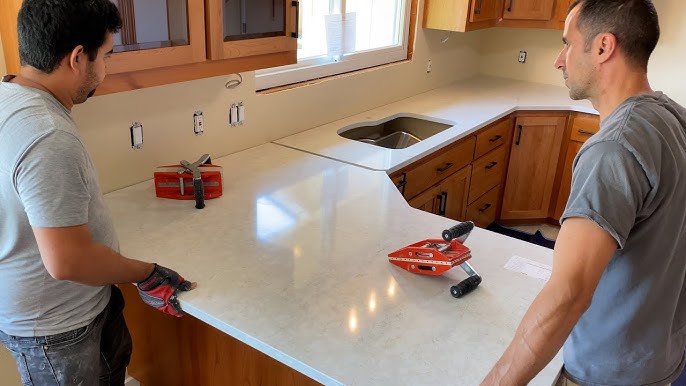
A seamless countertop installation process is ensured by organizing your kitchen. Clear countertops, cabinets, and surrounding areas completely. Make sure installers have easy access to entryways and workspaces. Proper preparation helps avoid delays and installation-day complications.
Things to Remove Before Kitchen Countertop Installation Day
Before installation day, remove small appliances, décor, and personal items from countertops. Empty cabinets beneath sinks and cooktops for installer access. Disconnect plumbing and electrical fixtures if required. This preparation ensures safety and efficient installation.
Cabinet Requirements for Kitchen Countertop Installation
Kitchen cabinets must be sturdy, properly anchored, and level before countertop installation. Weak or unsecured cabinets can cause structural failure. Cabinets should meet weight-bearing requirements for stone surfaces. Ensuring cabinet readiness protects your investment.
Why Cabinet Leveling Is Critical Before Installing Countertops
Level cabinets are essential for preventing countertop stress and cracking. Uneven cabinets can cause gaps, misaligned seams, and drainage issues. Proper leveling ensures even weight distribution across the surface. This step directly affects the lifespan of the countertop.
How Professionals Level Cabinets for Countertop Installation
Professionals level cabinets using shims and precision tools to achieve industry standards. Cabinets are adjusted and secured firmly to walls or floors. Installers check alignment multiple times before installation. This process ensures a stable and flat surface for countertops.
Measuring and Templating for Accurate Countertop Installation
Templating captures exact measurements of your kitchen layout. Installers account for walls, appliances, sinks, and overhangs. Digital or laser templating improves accuracy and reduces errors. Precise templating is the foundation of successful countertop installation.
What Happens on Kitchen Countertop Installation Day
On installation day, crews prepare the space and protect surrounding areas. Countertops are dry-fitted before being permanently secured. Seams, cutouts, and adjustments are completed on-site. Final inspection ensures everything meets quality standards.
Step-by-Step Kitchen Countertop Installation Process
The process includes removal of old countertops, dry fitting, seaming, and securing new slabs. Sink and cooktop cutouts are refined as needed. Caulking and sealing complete the installation. Each step ensures durability and a flawless finish.
How Long Does Kitchen Countertop Installation Take?

Installation time depends on material, kitchen size, and project complexity. Most standard kitchens take two to four hours for installation. Fabrication and templating occur beforehand. Full project timelines typically range from one to two weeks.
Kitchen Countertop Installation Timeline From Start to Finish
The timeline begins with consultation and material selection. Templating follows cabinet installation and leveling. Fabrication usually takes several business days. Final installation completes the process efficiently.
Will Kitchen Countertop Installation Disrupt Daily Life?
Kitchen countertop installation causes temporary inconvenience. Kitchens may be unusable on installation day. Noise and dust are common but controlled. Proper planning minimizes disruption to daily routines.
Safety Precautions During Kitchen Countertop Installation
Safety is critical due to heavy materials and power tools. Installers use protective equipment and secure work areas. Homeowners should keep pets and children away. Following safety protocols prevents accidents and injuries.
Sink and Cooktop Cutouts During Countertop Installation
Cutouts for sinks and cooktops require precision and care. Pre-cut openings are refined during installation. Proper support ensures fixtures remain secure. Accurate cutouts prevent cracking and alignment issues.
Seaming Techniques Used in Kitchen Countertop Installation
Seaming joins multiple slabs into a unified surface. Installers use color-matched adhesives for minimal visibility. Advanced tools ensure tight and even seams. Quality seaming improves both strength and appearance.
How Countertops Are Secured to Kitchen Cabinets
Countertops are secured using epoxy, brackets, and adhesives. Proper fastening prevents shifting and movement. Support points are strategically placed. Secure installation ensures long-term stability.
Caulking and Sealing After Kitchen Countertop Installation
Caulking seals edges where countertops meet walls and backsplashes. Sealing protects porous materials from moisture and stains. These finishing steps enhance durability. Proper sealing maintains cleanliness and hygiene.
Common Mistakes to Avoid During Countertop Installation

Common mistakes include improper measurements and unlevel cabinets. Skipping professional installation can void warranties. Poor seam alignment affects appearance and strength. Avoiding these errors saves time and money.
DIY vs Professional Kitchen Countertop Installation
DIY installation may suit lightweight materials like laminate. Stone countertops require professional expertise and tools. Professionals ensure accuracy and safety. Choosing experts reduces costly mistakes.
Can You Install Kitchen Countertops Without Replacing Cabinets?
Yes, countertops can be installed on existing cabinets if they are strong and level. Cabinet conditions must meet installation requirements. Reinforcements may be necessary. This option saves money during renovations.
Cost of Kitchen Countertop Installation Explained
Costs vary by material, labor, and kitchen size. Stone countertops are more expensive to install. Labor includes templating, fabrication, and fitting. Understanding costs helps with budgeting.
Factors That Affect Kitchen Countertop Installation Cost
Material choice significantly impacts price. Edge profiles, cutouts, and seams add costs. Cabinet preparation also affects pricing. Location and installer expertise matter as well.
Hidden Costs to Watch Out for During Countertop Installation
Hidden costs may include cabinet repairs and plumbing reconnections. Additional cutouts can increase pricing. Structural supports may be required for overhangs. Discussing details upfront avoids surprises.
How to Choose the Right Installer for Kitchen Countertops
Look for experience, certifications, and reviews. Ask about warranties and installation methods. Professional installers provide clear timelines and pricing. Choosing the right expert ensures quality results.
Questions to Ask Before Hiring a Countertop Installer
Ask about experience with your chosen material. Confirm warranty coverage and insurance. Inquire about installation timelines. Clear communication prevents misunderstandings.
Tools and Equipment Used in Kitchen Countertop Installation

Installers use laser measuring tools and CNC machines. Vacuum lifters help move heavy slabs safely. Precision saws create accurate cutouts. Professional tools ensure superior results.
Structural Support Needs for Kitchen Island Countertops
Kitchen islands often require additional support. Heavy materials need reinforced cabinetry or brackets. Proper support prevents sagging. Structural planning ensures long-term stability.
Overhang and Bracket Requirements for Countertop Installation
Overhangs beyond standard limits require brackets or corbels. Support depends on material weight and depth. Proper planning avoids structural failure. Brackets also enhance safety.
How to Minimize Dust and Noise During Installation
Installers use vacuum attachments and protective coverings. Dust barriers protect nearby areas. Scheduling installation during low-activity hours helps. Professional practices keep disruption minimal.
Kitchen Countertop Installation for Small Kitchens
Small kitchens require precise measurements and efficient layouts. Compact spaces benefit from seamless installation. Proper planning maximizes functionality. Skilled installers optimize space usage.
Installing Countertops in Open-Concept Kitchens
Open-concept kitchens demand clean seams and visual flow. Installers focus on alignment and symmetry. High-quality finishes enhance overall design. Professional installation ensures consistency.
How to Care for New Countertops After Installation
Care varies by material type. Sealing and cleaning protect surfaces. Avoid harsh chemicals and heavy impact. Proper care extends countertop lifespan.
When Can You Use Your Kitchen After Countertop Installation?
Light use is often possible within 24 hours. Sinks and appliances may require reconnection. Follow installer recommendations. Allow adhesives to fully cure.
Post-Installation Inspection Checklist for Homeowners
Check seams, edges, and alignment. Ensure fixtures are secure and functional. Look for gaps or uneven areas. Address concerns immediately.
Warranty Coverage for Kitchen Countertop Installation
Warranties depend on material and installer. Professional installation often protects coverage. Understand warranty terms clearly. Proper care maintains validity.
How Professional Installation Protects Your Countertop Warranty
Manufacturers require certified installation. Incorrect installation voids warranties. Professionals follow approved methods. This protection adds long-term value.
Signs of Poor Kitchen Countertop Installation
Visible gaps and uneven seams indicate problems. Cracks may appear over time. Poor sealing causes water damage. Early detection prevents major repairs.
How to Fix Common Countertop Installation Issues
Minor issues may be repaired with resealing or adjustments. Structural problems require professional correction. Addressing issues quickly reduces damage. Expert help ensures proper fixes.
Kitchen Countertop Installation for Remodels vs New Homes
Remodels may require cabinet modifications. New homes allow streamlined installation. Planning differs based on project type. Professionals adapt methods accordingly.
Eco-Friendly Kitchen Countertop Installation Practices
Eco-friendly practices reduce waste and water usage. Sustainable materials support green living. Efficient fabrication minimizes environmental impact. Responsible installation benefits homeowners and the planet.
Why Experience Matters in Kitchen Countertop Installation
Experienced installers handle challenges efficiently. Skill ensures accuracy and safety. Knowledge of materials prevents damage. Experience delivers consistent quality.
How Quality Installation Increases Home Value
Well-installed countertops enhance visual appeal. Durable installation reduces future repairs. Buyers value professional craftsmanship. Quality installation boosts resale value.
Final Thoughts on Kitchen Countertop Installation
Installing a kitchen countertop is a significant financial commitment for your house. Proper planning and professional execution ensure lasting results. Selecting the appropriate installers and materials is crucial. A well-installed countertop adds beauty, function, and value.
FAQ,s
1. How long does kitchen countertop installation take?
Most standard kitchen countertop installations take between 4 to 8 hours. Larger or custom kitchens may require a full day. Fabrication time before installation can take several days.
2. Can I install kitchen countertops myself?
Yes, DIY installation is possible for laminate or butcher block countertops. However, stone materials like granite or quartz require special tools and experience. Hiring a professional reduces risk of damage.
3. What is the most durable countertop material?
Quartz is considered one of the most durable options available. It resists scratches, stains, and does not require sealing. Granite is also strong but needs periodic maintenance.
4. Do granite countertops need sealing?
Yes, granite is a natural stone and requires sealing. Sealing helps prevent stains and moisture damage. Most homeowners seal granite once a year.
5. How much does kitchen countertop installation cost?
The average cost ranges from $1,500 to $4,500. Pricing depends on material type, kitchen size, and labor charges. Premium materials like marble can cost more.
6. Can new countertops increase home value?
Yes, updated countertops improve kitchen appearance instantly. A modern kitchen attracts more buyers. It can significantly boost resale value.
7. How do I maintain my new countertop?
Clean daily using mild soap and water. Avoid harsh chemicals or abrasive pads. Natural stones should be resealed annually.
8. What is the cheapest countertop option?
Laminate is the most affordable countertop material. It offers many design options at a lower price. Modern laminates can mimic stone finishes.
9. Should countertops be installed before backsplash?
Yes, countertops are installed first. This ensures proper alignment and fitting. The backsplash is added afterward for a clean finish.
10. What is the standard thickness for kitchen countertops?
The standard thickness for stone countertops is about 1.25 inches. Some modern designs use thicker edges for a bold look. Thickness may vary based on material choice.
Conclusion
Kitchen countertop installation is a valuable investment that enhances both the beauty and functionality of your kitchen. Choosing the right material, preparing your space properly, and hiring experienced professionals can ensure a smooth and long-lasting installation process. With proper care and maintenance, your new countertops will not only elevate your kitchen’s style but also provide durability and performance for many years to come.